Posted by Dave on May 12th 2026
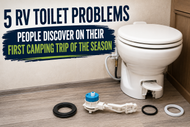
5 RV Toilet Problems People Discover on Their First Camping Trip of the Season
After months in storage, RV owners often discover toilet problems the moment camping season begins. Seals dry out, water valves crack, odors appear, and flush mechanisms suddenly stop working after sitting through winter. The good news? Many of the most common RV toilet issues are easy to diagnose and repair with the right replacement parts.
If your RV toilet is acting up on your first trip of the season, here are the most common problems to look for — and what usually causes them.
1. The RV Toilet Won’t Hold Water
One of the most common springtime RV toilet complaints is a bowl that slowly drains after flushing. If your toilet won’t hold water, the most likely cause is a worn or dried-out seal.
During storage, rubber seals can dry out, flatten, or collect debris that prevents a proper seal.
Common Causes
- Worn blade seal
- Dirty ball seal
- Dried rubber components
- Debris preventing full closure
Common Symptoms
- Water slowly disappears from bowl
- Sewer odors entering RV
- Toilet needs frequent refilling
Typical Fix
In many cases, replacing the toilet seal restores proper operation. Cleaning and lubricating the seal may help temporarily, but older seals often need replacement.
2. Water Is Leaking Around the Back of the Toilet
Many RV owners discover water pooling behind the toilet after reconnecting water systems for the season.
Cold winter temperatures can crack plastic water valves or fittings if any water remained in the system during storage.
Common Causes
- Cracked water valve
- Loose water line connection
- Freeze damage
- Worn vacuum breaker
Common Symptoms
- Water behind or underneath toilet
- Leaking during flush
- Damp bathroom floor
Typical Fix
Inspect the water valve and fittings carefully for cracks. Many RV toilets use replaceable flush valves and water modules that can be swapped without replacing the entire toilet.
3. The Flush Pedal Sticks or Feels Hard to Push
After sitting unused for months, flush pedals and internal linkage components can become stiff or sticky.
This is especially common on older RV toilets exposed to dirt, hard water buildup, or dry seals during storage.
Common Causes
- Dry linkage components
- Mineral buildup
- Worn pedal mechanism
- Damaged return spring
Common Symptoms
- Pedal feels stiff
- Pedal does not fully return
- Toilet blade stays partially open
Typical Fix
Lubricating moving parts may help temporarily, but worn pedal assemblies or springs may need replacement.
4. Strong Sewer Odors Suddenly Appear
Warm weather camping often makes RV toilet odors much more noticeable. Higher temperatures amplify tank odors, especially if seals are leaking or tanks were not fully cleaned before storage.
Common Causes
- Toilet seal leak
- Dry bowl seal
- Full black tank
- Roof vent blockage
- Poor tank maintenance
Common Symptoms
- Strong sewer smell inside RV
- Odor strongest near bathroom
- Smell increases in warm weather
Typical Fix
Start by ensuring the toilet holds water properly. A functioning water seal is one of the biggest defenses against black tank odors.
5. The Toilet Flushes Weakly or Incompletely
If your RV toilet suddenly has a weak flush at the start of camping season, restricted water flow is often the culprit.
Hard water deposits, partially clogged jets, or weakened water valves can reduce flushing performance.
Common Causes
- Clogged flush jets
- Restricted water flow
- Weak water pressure
- Aging flush valve
Common Symptoms
- Weak rinse action
- Incomplete bowl cleaning
- Poor waste movement
Typical Fix
Cleaning the flush system may help, but older water valves and flush components sometimes need replacement to restore proper performance.
Don’t Ignore Small RV Toilet Problems Early in the Season
Minor toilet issues discovered on the first camping trip often become much bigger problems later in the summer. Catching leaks, worn seals, and failing flush components early can help prevent water damage, odors, and ruined camping trips.
Whether you need replacement seals, water valves, flush pedals, or a complete new RV toilet, having the right parts ready before peak camping season can save a lot of frustration later.
Frequently Asked Questions
Why does my RV toilet suddenly leak after winter?
Cold temperatures can crack plastic valves and fittings if water remained inside during storage. Dried seals are also common after long periods of inactivity.
Why won’t my RV toilet hold water anymore?
The most common cause is a worn blade or ball seal that no longer seals properly.
Can RV toilet seals be replaced?
Yes. Many RV toilets have replaceable seals, valves, and flush components that can extend the life of the toilet.
Should I repair or replace my RV toilet?
If the toilet body is still in good condition, replacing seals or valves is often cost-effective. Older toilets with multiple failing parts may be better candidates for full replacement.